

Multifamily Construction Costs in Texas: What Developers Should Budget
Understanding what multifamily construction costs in Texas projects require is one of the most important responsibilities facing developers today. Rising material prices, labor availability, land acquisition costs, permitting requirements, and financing expenses can significantly affect project feasibility and long-term returns.
Texas remains one of the nation’s strongest multifamily development markets. Population growth, business expansion, and housing demand continue to drive apartment construction across major metropolitan areas. However, successful developments require accurate budgeting and proactive planning long before construction begins.
Developers evaluating new projects often work with experienced multifamily construction services providers to establish realistic budgets, identify risks, and improve cost predictability throughout the development process.
Whether planning a suburban garden-style apartment community or evaluating apartment construction cost Dallas projects, understanding where costs originate helps developers make informed decisions that support project success.
Reserve at Mayfield project by ELITE Construction
The Reserve at Mayfield is a ground-up construction project in Arlington, TX
TL;DR
Multifamily construction costs in Texas continue to be influenced by labor availability, material pricing, land costs, permitting requirements, financing conditions, and project complexity. Developers who invest in thorough preconstruction planning, value engineering, and active budget management are better positioned to control costs and improve project performance.
Key Takeaways
- Texas remains one of the strongest multifamily development markets in the country.
- Labor and material costs continue to impact project budgets.
- Apartment construction cost Dallas projects may differ from other Texas markets.
- Early planning improves cost predictability.
- Value engineering helps balance cost control and quality.
- Experienced construction partners help reduce financial risk.
Why Multifamily Construction Costs Continue to Rise in Texas
Texas remains attractive for multifamily investment because of strong economic growth and population expansion. While demand remains strong, several factors continue to influence development costs.
Population Growth and Housing Demand
Texas continues to attract residents from across the country. Major markets such as Dallas-Fort Worth, Austin, Houston, and San Antonio experience ongoing housing demand that supports multifamily development activity.
As demand increases, competition for land, labor, and materials also grows. These factors place upward pressure on project costs.
Construction Labor Challenges
Labor remains one of the largest expenses in multifamily development.
Skilled workers including:
- Electricians
- Plumbers
- Concrete crews
- Framers
- HVAC technicians
remain in high demand across Texas.
Competition for experienced trades often affects labor rates and project schedules, making workforce planning an important component of budgeting.
Material Cost Volatility
Construction materials continue to experience pricing fluctuations due to market conditions, manufacturing capacity, transportation costs, and supply chain disruptions.
Developers frequently monitor Producer Price Index construction materials data to evaluate material cost trends and improve forecasting accuracy.
Major Cost Categories Developers Must Budget For
Understanding where project dollars are spent helps developers build more accurate budgets.
Land Acquisition
Land costs vary significantly across Texas.
Urban locations generally command higher prices due to:
- Limited availability
- Strong demand
- Infrastructure access
- Development opportunities
Developers evaluating apartment construction cost Dallas projects often find land acquisition represents a substantial portion of total project costs.
Site Development
Site preparation frequently includes:
- Clearing and grading
- Utility installation
- Drainage improvements
- Stormwater management
- Road construction
Unexpected site conditions can create additional expenses if not identified during due diligence.
Hard Construction Costs
Hard costs typically include:
- Foundations
- Structural systems
- Roofing
- Exterior finishes
- Interior construction
- Building systems
These costs often represent the largest portion of the construction budget.
Soft Costs
Soft costs may include:
- Architectural fees
- Engineering services
- Legal expenses
- Permitting fees
- Financing costs
- Insurance
Developers should account for these expenses early in the planning process.
Understanding Apartment Construction Cost Dallas Projects
Dallas remains one of the most active multifamily markets in Texas.
Strong Demand Creates Opportunity
Population growth and corporate relocation activity continue to support apartment demand throughout the Dallas-Fort Worth region.
This demand creates development opportunities but also increases competition for resources.
Labor Availability Impacts Budgets
Because Dallas supports significant commercial and residential construction activity, labor availability often influences project pricing.
Contractors must compete for skilled workers, which can affect labor rates throughout the project lifecycle.
Municipal Requirements
Permitting, inspections, and local development requirements can vary by jurisdiction.
Developers should evaluate:
- Zoning requirements
- Density allowances
- Infrastructure obligations
- Impact fees
during the planning phase to avoid unexpected expenses.
The Importance of Preconstruction Planning
One of the most effective ways to manage multifamily construction costs is through detailed preconstruction planning.
Accurate Budget Development
Effective budgeting begins with realistic cost estimates.
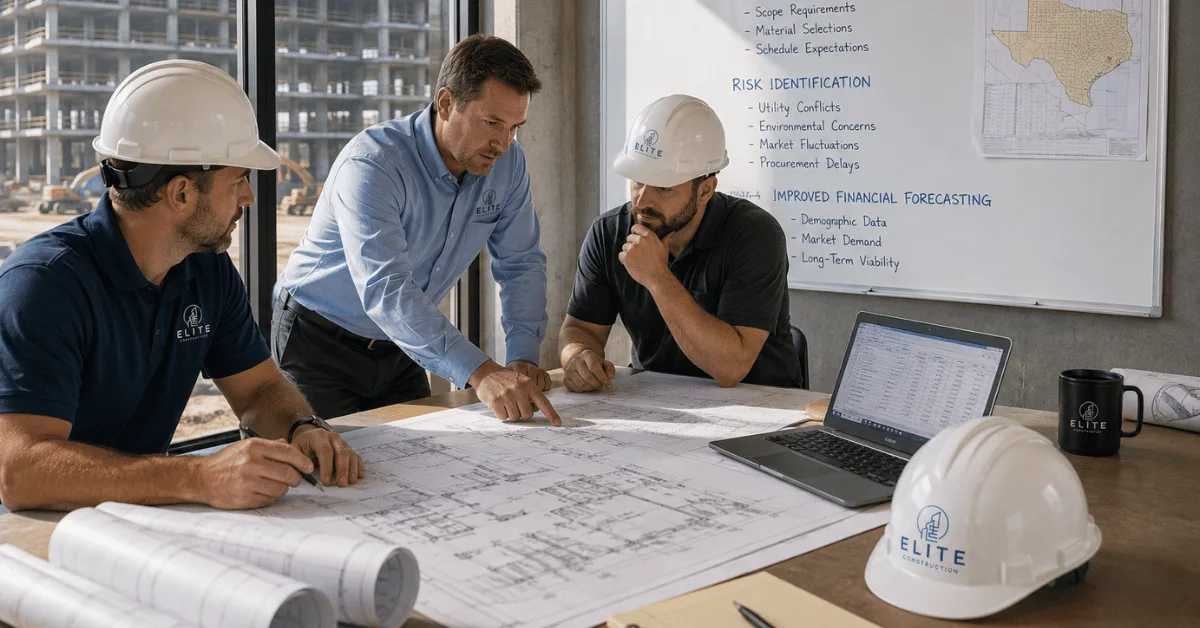
Preconstruction activities help teams evaluate:
- Site conditions
- Scope requirements
- Material selections
- Schedule expectations
before major financial commitments are made.
Risk Identification
Potential challenges become easier to manage when identified early.
Common risks include:
- Utility conflicts
- Environmental concerns
- Market fluctuations
- Procurement delays
Addressing these issues before construction begins often reduces cost exposure.
Improved Financial Forecasting
Many developers rely on Texas Demographic Center population projections and regional economic data when evaluating long-term project viability and demand forecasts.
How Value Engineering Supports Budget Control
Value engineering is often misunderstood as simple cost cutting.
In reality, value engineering focuses on maximizing project value while maintaining performance and quality standards.
Material Alternatives
Teams may evaluate alternative materials that provide similar durability and appearance at lower cost.
Building System Optimization
Mechanical, electrical, and plumbing systems can often be refined to improve efficiency while controlling costs.
Construction Methods
Alternative construction approaches may improve productivity and reduce labor requirements without compromising quality.
Successful value engineering balances cost savings with long-term asset performance.
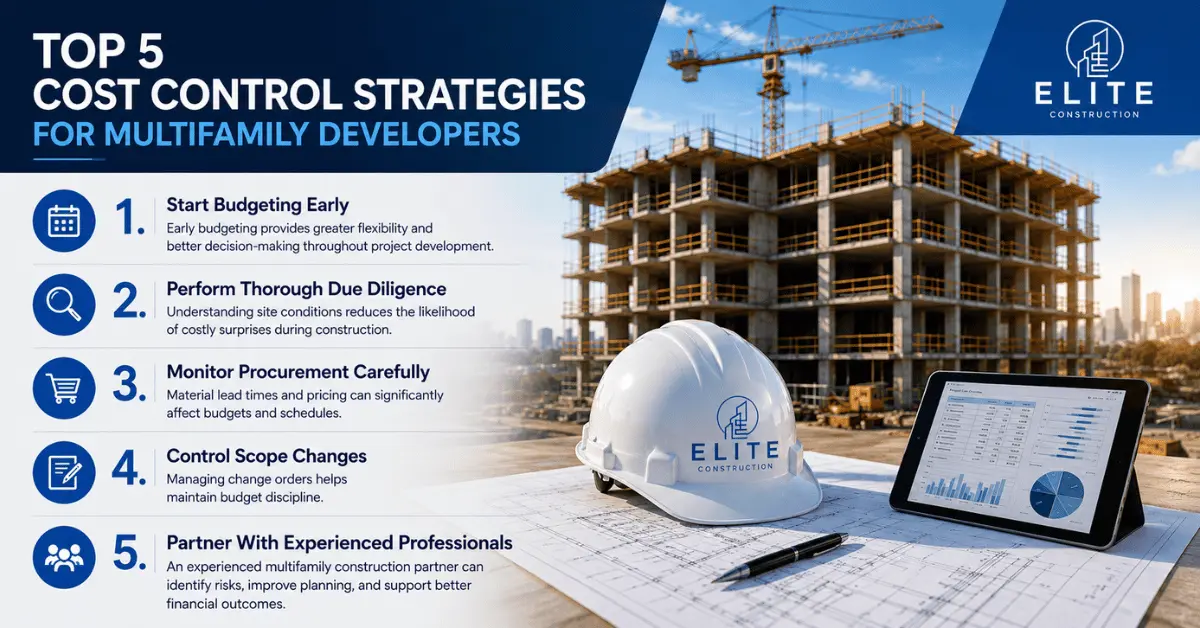
Top 5 Cost Control Strategies for Multifamily Developers
1. Start Budgeting Early
Early budgeting provides greater flexibility and better decision-making throughout project development.
2. Perform Thorough Due Diligence
Understanding site conditions reduces the likelihood of costly surprises during construction.
3. Monitor Procurement Carefully
Material lead times and pricing can significantly affect budgets and schedules.
4. Control Scope Changes
Managing change orders helps maintain budget discipline.
5. Partner With Experienced Professionals
An experienced multifamily construction partner can identify risks, improve planning, and support better financial outcomes.
Supply Chain Management and Procurement Planning
Material procurement remains a major consideration for multifamily developers.
Long Lead-Time Materials
Certain products may require months of lead time, including:
- Electrical equipment
- HVAC units
- Elevators
- Specialty finishes
Early procurement helps minimize schedule disruptions.
Supplier Relationships
Established supplier relationships often improve pricing, availability, and delivery reliability.
Inventory Planning
Proper planning reduces the likelihood of shortages and unexpected procurement costs.
Labor Productivity and Workforce Efficiency
Labor costs involve more than hourly wage rates.
Scheduling Coordination
Proper sequencing of trades improves productivity and reduces downtime.
Trade Partner Management
Strong subcontractor relationships often improve workforce reliability and project performance.
Technology and Project Management
Modern project management tools improve communication, scheduling, and accountability across large multifamily developments.
Why Developers Choose ELITE Construction
Developers seeking cost certainty and project efficiency often work with an experienced multifamily construction partner that understands the unique challenges associated with Texas multifamily development.
ELITE Construction supports developers through:
- Preconstruction planning
- Budget development
- Value engineering
- Procurement coordination
- Schedule management
- Construction oversight
This collaborative approach helps identify risks early and improve overall project performance.
FAQs
What factors affect multifamily construction cost Texas projects the most?
Labor, materials, land acquisition, permitting requirements, financing conditions, and project complexity are among the most significant cost drivers.
How does apartment construction cost in Dallas compare to other Texas cities?
Dallas often experiences higher land and labor costs due to strong demand and ongoing development activity.
What percentage of a multifamily budget should be contingency?
Many developers maintain contingency reserves between 5% and 15% depending on project complexity and risk profile.
Why is preconstruction planning important?
Preconstruction planning improves budgeting accuracy, identifies risks early, and supports better decision-making throughout the project lifecycle.
How can developers reduce construction costs without sacrificing quality?
Value engineering, early procurement, efficient scheduling, and experienced project management can help control costs while maintaining quality standards.
Multifamily Renovation by ELITE Construction
Conclusion
Understanding what multifamily construction costs in Texas projects require is essential for successful development planning. Labor availability, material pricing, land acquisition, permitting, and financing all contribute to overall project costs, making accurate budgeting a critical part of the development process.
Developers who invest in detailed planning, thorough due diligence, and proactive cost management are better positioned to navigate market challenges and improve project outcomes. Whether evaluating apartment construction cost Dallas projects or pursuing opportunities elsewhere in Texas, strong budgeting practices help support financial stability and long-term success.
ELITE Construction works with developers to improve planning, manage risk, and support successful multifamily developments through comprehensive construction expertise and collaborative project management.
About the Author
ELITE Construction is a general contractor specializing in multifamily, hospitality, senior living, commercial, and large-scale development projects throughout the United States. The company partners with developers, investors, architects, and ownership groups to deliver projects that emphasize quality, communication, efficiency, and long-term value.
Learn more about ELITE Construction and explore the company’s leadership, experience, and project approach on the About ELITE Construction page.
Explore more blogs...
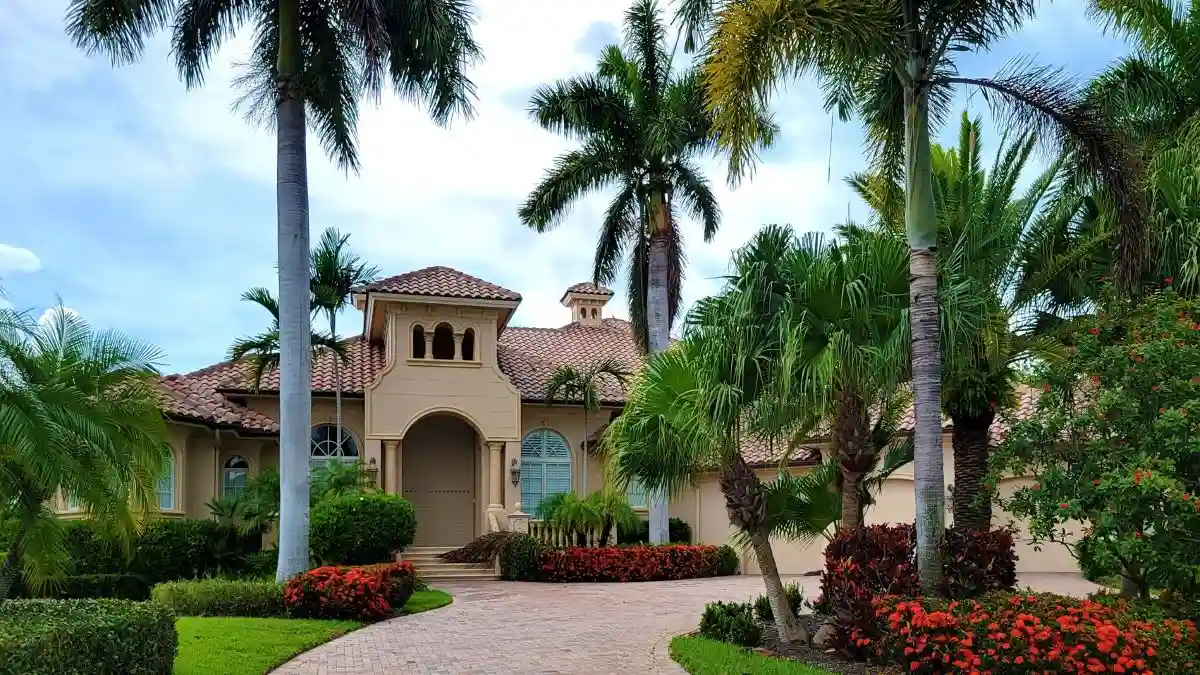
Retirement Community Development: Designing for Comfort, Care, and Connection
Florida continues to experience one of the fastest-growing retiree populations in the nation. As more adults seek communities designed for convenience, comfort, and wellness, the demand for innovative senior living spaces is stronger than ever. That is where...
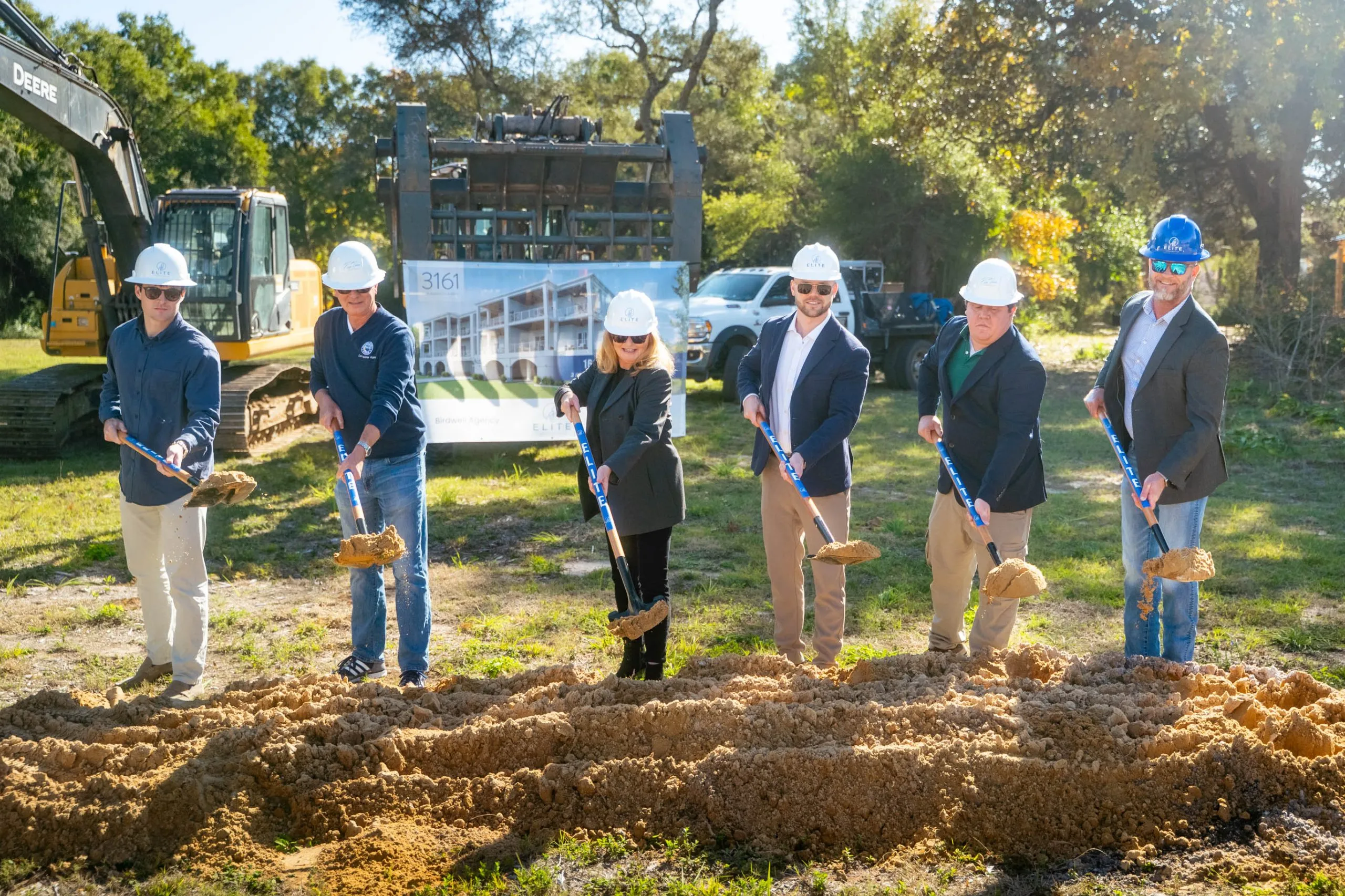
ELITE Breaks Ground on Luxury Residential Development in Pensacola, Florida
ELITE Construction officially broke ground on 3161 Olde Barrancas Avenue, a luxury condominium development in Pensacola, Florida. The ceremony marks a significant milestone for the company as its first building project outside of Texas. The groundbreaking brought...
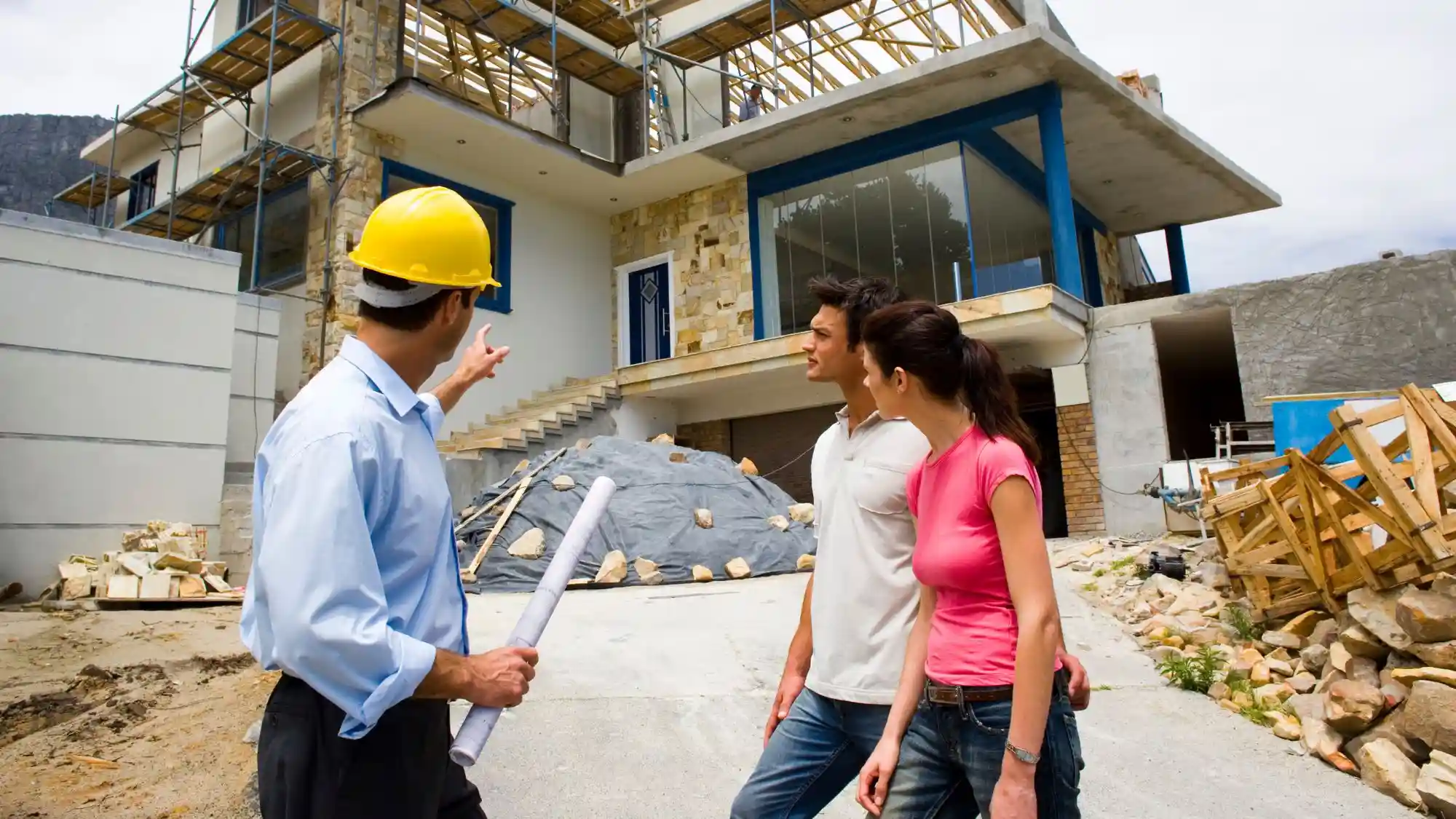
Multifamily General Contractors: Building Communities That Last
Florida’s population growth continues to create strong demand for high-quality multifamily housing. From luxury apartment complexes to affordable housing developments, the state’s construction market offers tremendous opportunity for developers and investors. Yet...
